

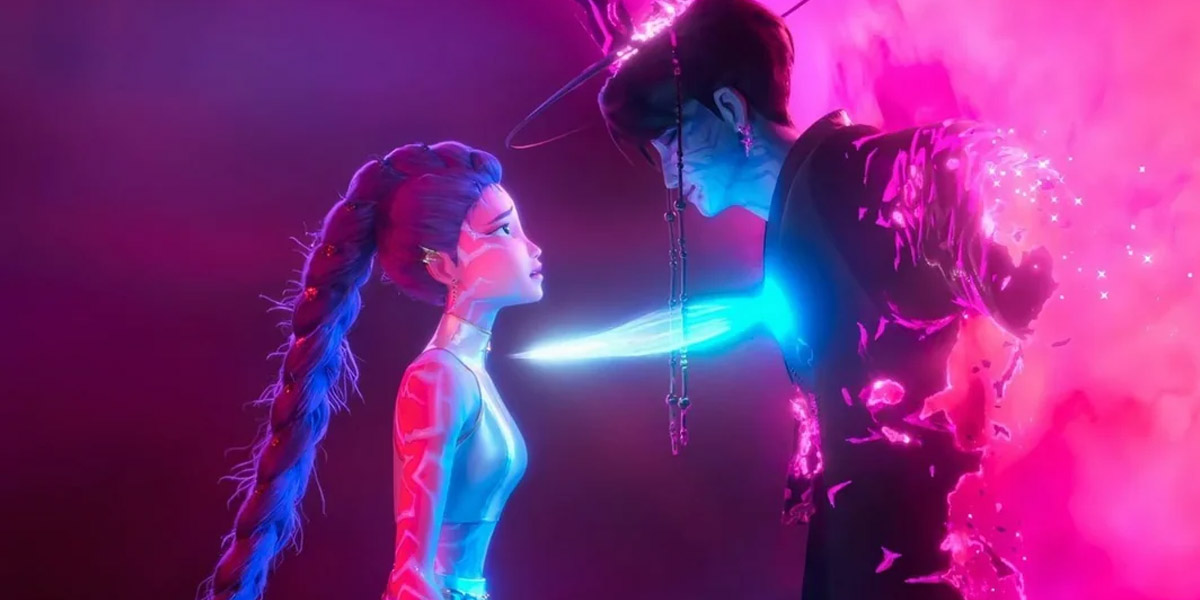
Did you remember the heartbreak? That slow and painful disappearance of Kim Shin in “Goblin,” Jeong Gu Won’s last gaze in “My Demon,” or the way “Uncontrollably Fond” left you in silence when you still had so much more to say. That devastating ache when the male lead just left, leaving you heartbroken. So, when Jinu, the demon K-pop idol with eyes filled with regrets, vanished in the final act of “KPop Demon Hunters,” the sting shocked you, wondering if he was really dead, looking for clues, and wishing him alive.
You thought it was a shocking, unexpected plot twist. But here’s the truth: you’ve been here before. Alive or dead, Jinu of “KPop Demon Hunters” actually reflects a familiar trope K-drama fans know too well: the art of the tragic male lead. And “KPop Demon Hunters” just made it animated.
Is Jinu Dead or Alive: “KPop Demon Hunters” Ending That Haunts You
The final act of “KPop Demon Hunters” doesn’t show a body. But it doesn’t offer hope either. Jinu turns against the darkness within himself to save Rumi—and disappears into the aftermath of his choice. No lingering gaze. No final confession. Just silence.
And silence, as K-drama fans know, is often worse than death. It’s the kind of ending that refuses to give you closure because it isn’t just about narrative. It’s emotional architecture—crafted to haunt you long after the credits roll.
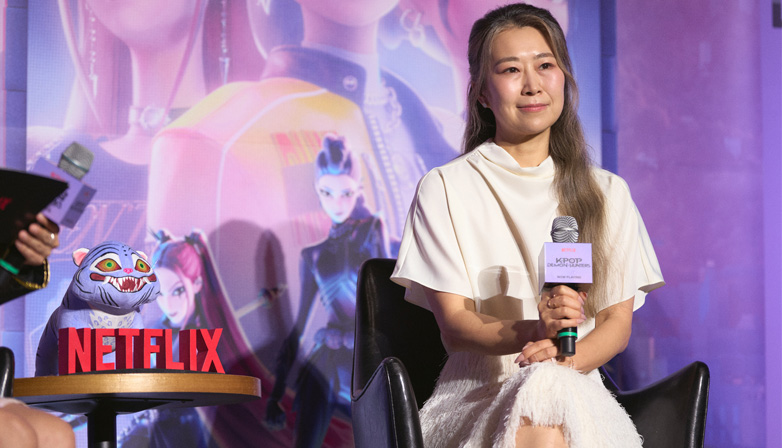
What’s even cleverer is that director Maggie Kang doesn’t confirm anything—even after the press conference on August 22, 2025, at CGV Yongsan, Seoul. And that ambiguity is most likely deliberate. She lets the audience sit with uncertainty, something rare in an age of fast-paced fandoms and instant spoilers.
Because the moment you realize the story gives you no answer, you’re already in its grasp.
A Familiar Pain: The Tragic Male Archetype in K-drama and K-pop Storytelling
If you’ve been in the K-drama trenches long enough, you’ve probably developed a radar for doomed men. The emotionally repressed genius, the reluctant villain, the wounded protector—characters who are crafted to lose not because they’re weak, but because their loss means something.
Jinu is built from this very blueprint.
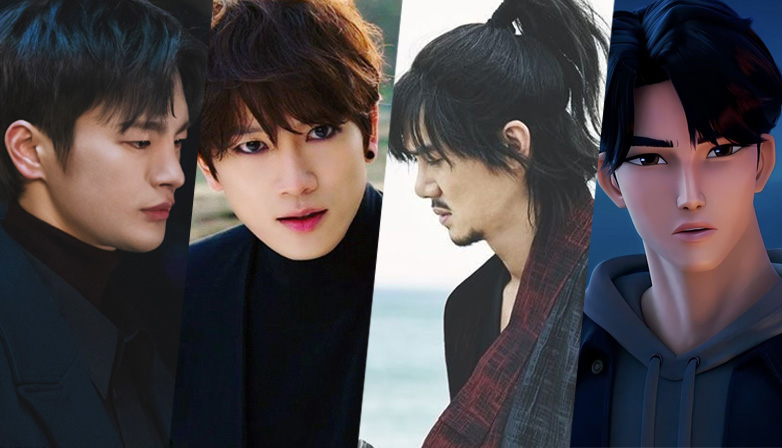
His arc mirrors countless second leads, misunderstood antiheroes, and sacrificial love interests who linger long after the credits roll. Take, for example, Myulmang in “Doom at Your Service,” Shin Se Gi in “Kill Me, Heal Me,” and Gu Dong Mae in “Mr. Sunshine.”
Try to relive their scenes and you’ll then understand that these men are emotional landmines. Their personal tales are carefully planted to explode quietly, long after the story ends.
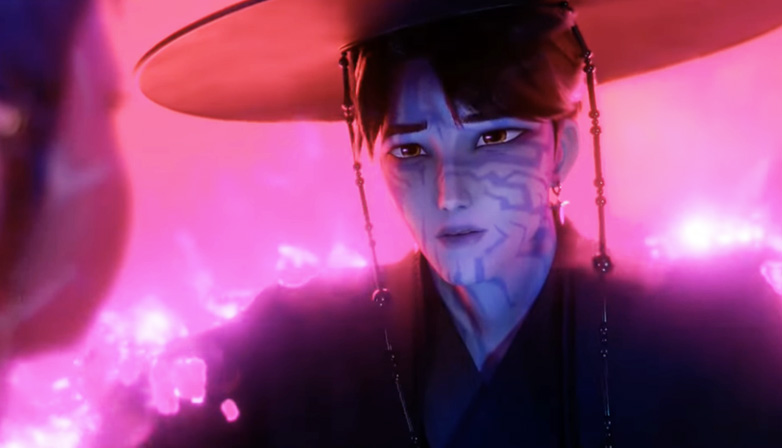
Jinu may have debuted as a minion of Gwi-ma, a member of a demon boy band in an animated movie. Yet, his emotional weight was written with all the tragic poetry of a real K-drama lead.
“Please Come Back”: Why “KPop Demon Hunters” Fans Need Jinu Alive
In recent years, K-dramas have slowly shifted toward a healing narrative: stories where trauma isn’t just completely erased but transformed instead.
Viewers have now grown tired of pain as an endpoint from those old-school melodramas. They want closure. Redemption. Second chances.
That’s why hoping for Jinu’s return isn’t beyond mere fangirling. It’s part of a deeper shift among K-drama fans, a belief that pain doesn’t have to be the only ending.
Fans today are craving stories that let characters grow through pain, not disappear in it. That’s why “Hospital Playlist” gave us warmth instead of heartbreak. It’s why fans sobbed when “Queen of Tears” allowed survival through love.

So when Jinu sacrificed himself, it stirred something deeper in fans: a quiet refusal to let the story end that way.
And not just because he was cool, or handsome, or had the best one-liners—though those things did steal our hearts. But because something about his goodbye felt incomplete. Like his story wasn’t meant to end there.
Over the last decade, fans have long graduated from simply mourning the characters. Instead, they’re hoping for a real resolution and expecting stories that let characters survive, heal, and return transformed.
And that’s why the hope for Jinu lives on.
It’s not denial. This is an emotional evolution.
Director Hints and the Sequel We’re Not Ready For
During the press conference interview on August 22, 2025, director Maggie Kang confirmed that the sequel is already in development—and that it may explore new genres like trot and metal.
But when asked about Jinu, she played coy.
She did, however, mention that each character had their own genre identity and story arc—and that the team loved weaving in Korean folklore, fantasy, and idol culture to shape emotional beats.
So, whether he’s dead or alive, the tragic fate of Jinu could be possibly tied to a larger myth in “KPop Demon Hunters.”
And there’s actually reason to believe so.
In Korean mythology, spirits and demons often return in altered forms—cleansed, cursed, or changed. Jinu could easily re-emerge, not as a shadow of his former self, but as a completely new being: a rival, a guide, or maybe just simply a memory.
And with a storyteller like Maggie Kang—who’s proven she’s unafraid to make bold, emotionally intelligent choices—bringing Jinu back wouldn’t feel like fan service. It would feel like healing.
The kind of second chance K-drama fans have longed for across timelines and tear-soaked finales. (Yes, “Scarlet Heart: Ryeo” Season 2, we’re still looking at you!)
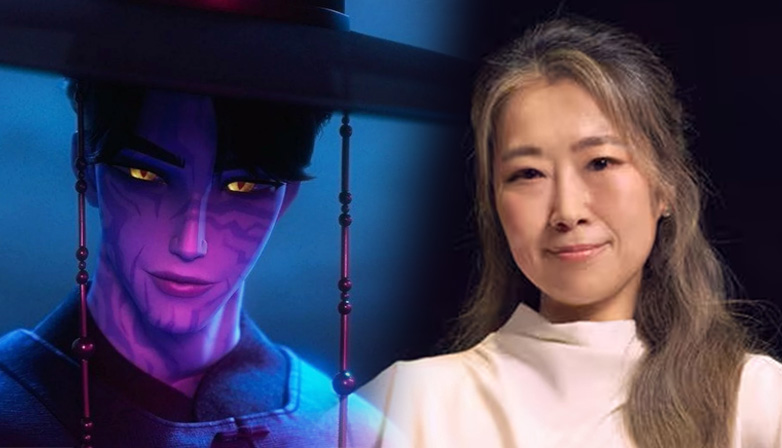
Jinu and the Farewell That Broke Too Many Hearts
Ultimately, for many fans, Jinu wasn’t just a side character. He was the soul of “KPop Demon Hunters,” the one who showed that even someone born from darkness could still choose light.
He was silent, restrained, and guilt-ridden. But he looked at Rumi like she mattered more than anything. And when he fought the demon within himself to protect her, he didn’t just die for her. He died believing she was worth saving.
Now, isn’t that what makes K-dramas so devastating? It’s never about how loud the love was—it’s about how deeply it was buried.
So yes, keep hoping. And keep sending petitions if you must. You’re allowed to keep these hopes alive, to rewatch the ending for the 12th time, looking for a flicker of movement or a hidden clue.
In the world of “KPop Demon Hunters,” Jinu might’ve just been a demon whose death paved the way for Rumi to accept her destiny. But in the hearts of fans, he was every tragic male lead who ever made you believe love meant sacrifice.
And somehow, even without being a full Korean production, “KPop Demon Hunters” captures that K-drama ache with uncanny precision.
Your Thoughts?
In the end, dead or alive, Jinu is more than just an ordinary character from “KPop Demon Hunters.” He’s a dream, a myth, and a heartbreak that stays in your heart and lingers forever.
Don’t you think so too? Which other characters, like Jinu of “KPop Demon Hunters,” whom you wish to return alive from the dead?
Please share your thoughts in the comments. We know you’ve got that one name you’ve never quite let go of.
Join us on Kpoppost’s Instagram, Threads, Facebook, X, Telegram channel, WhatsApp Channel and Discord server for discussions. And follow Kpoppost’s Google News for more Korean entertainment news and updates.